

In partnership with

Look, I’ve been around the block enough times to know when a "new paradigm" is actually just a polite way of saying we’re heading for a brick wall. For the last two years, every suit on CNBC has been screaming about AI like it’s some magical entity that lives in the "cloud." They talk about algorithms, neural networks, and LLMs like they’re made of thin air.
AI isn't made of code. It’s made of heat, silicon, and - most importantly - an ungodly amount of electricity.
We’ve reached the point where the math simply doesn't work anymore. According to the latest reports from the Energy Information Administration (EIA), AI data centers are on track to double the total U.S. electricity demand by 2028. Think about that for a second. We haven't significantly upgraded the backbone of our power grid in decades, and now we’re trying to plug a second United States into the wall. It’s like trying to run a Ferrari engine on a lawnmower’s fuel tank. It’s going to blow.
I’ve seen this kind of hubris before. In the late 90s, everyone thought the "Information Superhighway" was going to run on pixie dust. Then the fiber optic bubble burst because we realized you actually have to dig holes and lay cables. Today, the bottleneck isn't cables; it’s the grid itself. The American power grid is a 1950s relic held together by duct tape and hope. It’s failing, and the big boys at Google and Microsoft finally realize they can’t wait for the government to fix it.
The system is rigged to move slowly, but AI moves at the speed of light. That disconnect is creating the biggest energy crisis of our lifetime, and if you’re still holding onto the "software is eating the world" narrative without looking at who’s providing the lunch, you’re going to get steamrolled. This isn't about "green energy" or "sustainability" anymore. It’s about raw, unadulterated power. If you can’t keep the servers cool and the lights on, your trillion-dollar AI model is just an expensive paperweight.

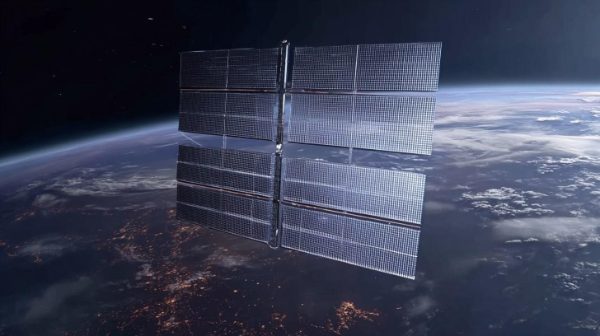
When things get desperate on Earth, the billionaires start looking at the stars. It sounds like a bad sci-fi movie, but Google’s "Project Suncatcher" is the ultimate admission of defeat. They’ve looked at the terrestrial grid, looked at the NIMBY lawsuits stopping every new power plant, and they’ve decided to bail.

Google is literally planning to launch constellations of TPU-equipped satellites into sun-synchronous orbits. Why? Because according to their own research and reports from SatNews, solar panels in space are up to 8x more efficient than those on the ground. Up there, the sun doesn't set, there are no clouds, and there’s no atmosphere to filter out the juice. They’re targeting a 650 km orbit where they can get continuous solar power to run their AI chips in the vacuum of space.
Imagine you’re at a bar and the tap is broken. You can either wait four hours for the plumber to show up (that’s the U.S. power grid), or you can walk upstairs to the brewery and drink straight from the tank. Google is tired of waiting for the plumber. They’re going straight to the source.
But don't go thinking this is a clean, easy win. Space is a junkyard. News coming out of Google’s own blog and Semafor highlights the massive risks of orbital debris. One stray bolt hitting a multi-billion dollar AI constellation at 17,000 miles per hour, and suddenly your "cloud computing" is a cloud of shrapnel.
The fact that Google is even considering this - spending billions to put data centers in orbit by 2027 - tells you everything you need to know about the state of our energy infrastructure. It’s a mess. It’s a complete and total disaster. They’d rather deal with the vacuum of space and the threat of Kessler Syndrome than deal with the local zoning board in Virginia or the aging transformers in Ohio. If that doesn't tell you the "little guy" is about to face some serious rolling blackouts while the tech giants hoard their own power, nothing will.
While Google is looking up, Microsoft is looking back - specifically, back to the site of the most famous nuclear accident in American history. Microsoft just inked a deal with Constellation Energy to restart Three Mile Island Unit 1. They need 835 megawatts of carbon-free power, and they need it yesterday.
This isn't just a one-off deal. It’s the start of a total nuclear revival. President Trump’s Executive Order 14301 has put a blowtorch to the tail of the nuclear industry. He’s mandated that new advanced nuclear reactors be online by July 4, 2026. That’s a "Manhattan Project" level timeline. The government has realized that if we don't fix the power situation, the AI revolution - and the economic dominance that comes with it - will move to China or wherever else they don't mind building a reactor in someone's backyard.

The problem? You can’t just flip a switch on these new Small Modular Reactors (SMRs). They don't run on the low-enriched uranium we’ve been using for the last fifty years. They need something called HALEU - High-Assay Low-Enriched Uranium.
We are currently in a hell of a spot. For years, we relied on Russia for this stuff. Now, we’re scrambling to build our own supply chain from scratch while the clock is ticking. The Department of Energy (DOE) is screaming about a HALEU shortage that threatens the entire nuclear restart. Without this "AI Fuel," all those fancy new reactors Trump wants by 2026 are just empty concrete shells.
This is where the "smart friend" advice comes in. Don't look at the companies building the reactors; look at the companies making the fuel. If you control the HALEU, you control the AI future. It’s the ultimate bottleneck. Microsoft can build all the data centers they want, and Trump can sign all the orders he wants, but if there’s no fuel, nobody’s winning.


Let’s talk about who’s actually holding the keys to this kingdom. Centrus Energy (LEU) is the name that keeps popping up in every serious conversation I have. They just secured a $100 million DOE contract to expand their facility in Piketon, Ohio. They’re aiming to produce 20 kg of HALEU a month by mid-2026.
Now, 20 kg might not sound like much when you’re talking about powering the entire AI revolution, but when you’re the only game in town, you have a monopoly. Centrus is the tip of the spear. Then you’ve got companies like BWXT, which is building a deconversion facility in the Netherlands, and X-Energy, which is partnering with Dow to use HALEU for industrial-scale reactors.
The narrative the media is feeding you is that AI is a "software race." Bullshit. It’s a materials and logistics race. It’s about who can enrich uranium, who can build the cooling systems, and who owns the "Digital Soil" - the land where these massive data centers sit.
The DOE has allocated $2.7 billion to a HALEU consortium that includes names like Oklo and TerraPower. They’re trying to diversify, but the lead time on these facilities is years, not months. We are heading into a massive supply-demand imbalance. When you have the world’s biggest tech companies (Microsoft, Google, Amazon) all competing for a limited supply of fuel and power, the price only goes one way.
This is the "Backdoor" I’m talking about. While the retail sheep are fighting over which AI chatbot is "smarter," the institutional whales are buying up the fuel and the land. They know that in a gold rush, you don't want to be the guy digging for gold; you want to be the guy selling the shovels and owning the land the mine sits on. In 2026, the "shovels" are HALEU pellets and the "land" is any plot with a direct line to a nuclear substation.
So, what’s the play for a guy like you? You’ve got a 401(k), you’ve got some skin in the game, and you’re tired of being the last one to know the truth.
First, stop chasing the AI software dragon. Most of these "AI-powered" startups are going to go bust when their burn rate exceeds their ability to find a wall outlet that actually works. The real wealth preservation and growth is in the hard assets.
We’re talking about:
Nuclear Fuel: Companies like Centrus Energy that are the gatekeepers of HALEU.
Physical Infrastructure: The firms building the SMRs and the deconversion plants (BWXT, X-Energy).
Digital Soil: Real estate and land plays that are specifically zoned for data centers with dedicated power.
The system is rigged, sure. The big asset managers like BlackRock are already moving in. But for once, the "little guy" has a roadmap. The government has literally put a deadline on this - July 4, 2026. They are telling you exactly what they need and when they need it.
Here’s the thing: History doesn't repeat, but it sure as hell rhymes. We saw it with the railroads in the 1800s and the oil boom in the early 1900s. The people who made generational wealth weren't the ones guessing which train would be fastest; they were the ones who owned the tracks.
Google is fleeing to space because they know the ground game is getting ugly. Microsoft is digging in at Three Mile Island because they know they need a moat of power. You need to position yourself where the power is.
Don't be an idiot and wait for the "all clear" signal from the mainstream media. By then, the price of admission will be ten times higher. Stake your claim in the fuel and the soil now, before the rest of the world realizes that AI runs on atoms, not just bits.
When Is the Right Time to Retire?

Determining when to retire is one of life’s biggest decisions, and the right time depends on your personal vision for the future. Have you considered what your retirement will look like, how long your money needs to last and what your expenses will be? Answering these questions is the first step toward building a successful retirement plan.
Our guide, When to Retire: A Quick and Easy Planning Guide, walks you through these critical steps. Learn ways to define your goals and align your investment strategy to meet them. If you have $1,000,000 or more saved, download your free guide to start planning for the retirement you’ve worked for.
If you're done with hype and want straight talk on markets, politics, AI, and tech - subscribe to Trade Talks Live.
