

I’ve been around the block enough times to know that when the government says they’re "streamlining" things for your own good, you’d better check your back pocket to see if your wallet is still there. On January 8, the Trump administration dropped a bombshell that most of the mainstream media is treating like a footnote. They’ve created a new Division for National Fraud Enforcement at the DOJ. Now, on paper, fighting fraud sounds great. Nobody likes a scammer. But here’s the kicker: this new Assistant Attorney General doesn't report to the Attorney General like every other lawyer in the building. They report directly to President Trump and Vice President Vance.
Look, here’s the thing… the Department of Justice is supposed to have a firewall between the guys with the badges and the guys in the Oval Office. When you melt that firewall down, law enforcement stops being about "the law" and starts being about "the mission." Former DOJ officials are already sounding the alarm that this direct supervision compromises criminal independence. To put it in the "Beer Test" terms: Imagine you’re at a bar and the owner decides that instead of the bouncer following the house rules, the bouncer only listens to the owner’s nephew. Suddenly, you aren't getting kicked out for fighting; you’re getting kicked out because the nephew doesn't like the look of your face. That’s where we are with federal enforcement right now. It’s a shift from traditional hierarchy to a direct-command structure that should make anyone with a brokerage account or a small business think twice about where they park their capital.

The Minnesota Canary: Why Local Fraud is Now a Federal Priority
If you want to see how this new machine works, look at Minnesota. What started as a viral video about daycare centers misappropriating public funds has turned into a multi-agency federal blitz. We’re talking the FBI, DHS, HHS, SBA, HUD - hell, even the USDA is involved. Vice President Vance didn’t stutter when he said this new DOJ division is going to "start and focus primarily in Minnesota" before going nationwide.
This isn't just about some guys cooking the books in St. Paul. Treasury Secretary Scott Bessent is already rolling out initiatives to "safeguard" the financial system by expanding federal scrutiny of state benefit programs. When the Treasury Department starts characterizing "combatting fraud" as a way to "protect taxpayers" at the state level, what they’re really doing is building a surveillance apparatus. They are using organized and sophisticated fraud schemes as the justification to dismantle the usual jurisdictional boundaries. For the average guy - the engineer, the manager, the guy just trying to keep his head down - this means the federal government is moving closer to your bank statement than ever before. They’re practicing in Minnesota, but the playbook is designed for all fifty states. If you think your local bank is a "safe haven" from federal overreach, you’re living in a dream world. The system is being re-wired to identify and disrupt "sophisticated schemes" across all jurisdictions, and in this environment, "sophisticated" is often just code for "anything we want to look at."
The $280 Billion Dollar Chicken: Vance, Russia, and the Death of Trust
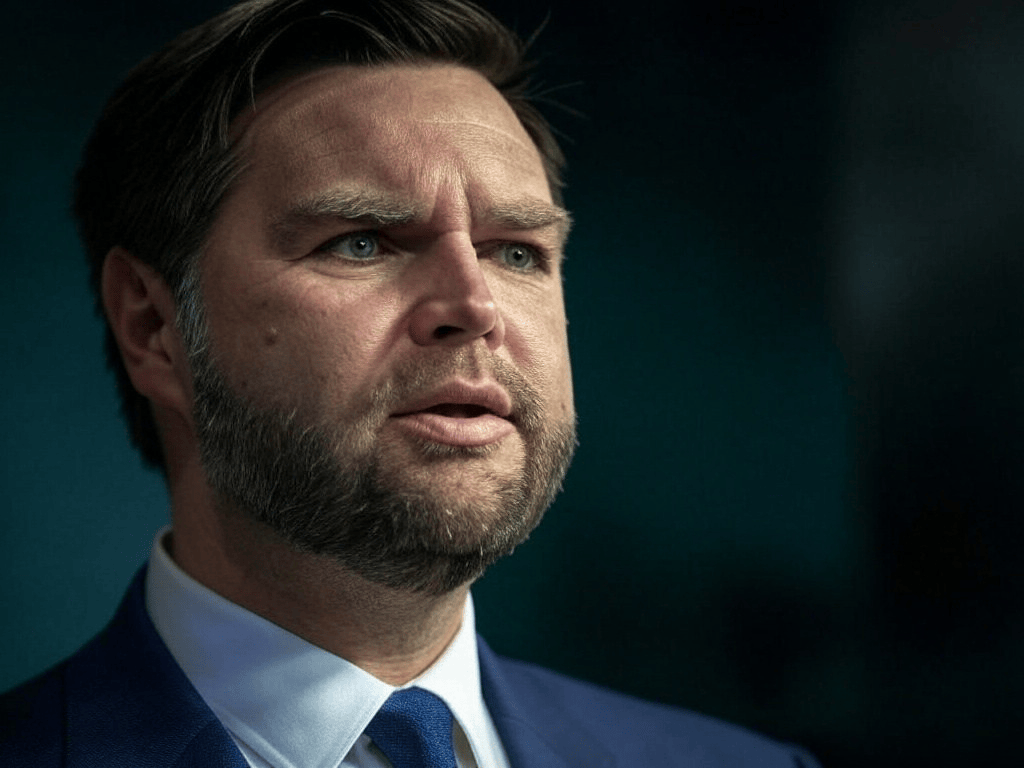
While the DOJ is tightening the screws at home, there’s a massive game of high-stakes poker happening on the global stage. We’re talking about $280 billion in frozen Russian sovereign assets. Now, a lot of folks in Congress - guys like Graham and Young - want to just seize that money and hand it to Ukraine. They think it’s a "no-brainer." But JD Vance is actually being the realist here. He’s arguing against the seizure because he knows what it does to the U.S. dollar.
Here is the profane truth: the only reason the U.S. dollar is the world’s reserve currency is because people believe their money is safe in our system. If we start seizing sovereign assets just because we don't like what a country is doing, every other country - China, India, Saudi Arabia - starts wondering when it’ll be their turn. They’ll stop holding dollars. Vance knows that if you kill the dollar’s stability, you kill the American dream for the "little guy" faster than any inflation spike ever could. The G7 and EU are currently paralyzed. They’ve committed to keeping the assets frozen until Russia pays reparations, but they’re terrified of an outright seizure. They’re using the interest from those assets to fund a $50 billion loan instead. It’s a middle-ground move because they know that once you cross the line into total confiscation, the rules of global finance are dead. You can’t un-ring that bell.
Why Your Brokerage Account is in the Crosshairs
If you think this "sovereign asset" talk is just academic bullshit that doesn't affect you, think again. Russia has already made it clear: if we take their $280 billion, they are coming for the $300 billion in Western assets still sitting in Russia. And they aren't just making idle threats. They’ve already seized $440 million from J.P. Morgan accounts in Russia.
Belgian Prime Minister Bart De Wever called the potential seizure of Russian assets "an act of war." Why? Because he knows that financial retaliation against Euroclear - the plumbing of the European financial system - could be catastrophic. When the big banks start losing hundreds of millions in retaliatory seizures, who do you think pays for it? It’s not the CEOs. It’s the shareholders, the pension funds, and the guys with 401(k)s. This is a global game of "tit-for-tat" where the collateral damage is your retirement. We’re seeing a world where physical assets are being confiscated from European companies and digital accounts are being drained. If the "big guys" like J.P. Morgan can’t protect their cash in this environment, what makes you think your local brokerage has the muscle to protect yours? The system is fracturing, and the cracks are running right through your portfolio.
The Strategic Bitcoin Reserve: From Criminal Asset to Government Stash
While one hand of the government is busy worrying about the dollar, the other hand is building a "Strategic Bitcoin Reserve." President Trump has established this new mechanism to manage cryptocurrency assets that the government has obtained through criminal or civil asset forfeiture. Think about that for a second. The government is now a "HODLer."
They are taking digital assets seized from people - some of whom haven't even been convicted of a crime yet, thanks to the way civil forfeiture works - and they’re using them to build a national crypto chest. This tells you two things. First, the government finally admits that Bitcoin has value. Second, they want to be the biggest whale in the room. This "Strategic Reserve" is just another way the state is centralizing power over the financial system. It’s ironic as hell, isn't it? Bitcoin was designed to be the "people's money," free from government control, and now it’s being used to pad the government’s own balance sheet using seized funds. It’s the ultimate "new paradigm" narrative, but it’s built on the same old foundation of "we take what we want." If the government is moving into the hard asset and crypto space to protect its own interests, you’d better be doing the same for yours.
The Reality Check: How to Protect Your Stash in a World of Seizures
So, what’s the takeaway from all this? We’ve got a DOJ reporting directly to the White House, a federal "fraud" unit testing its muscles in Minnesota, a global financial war over frozen billions, and a government building a Bitcoin reserve from seized loot. It’s a lot of noise, but the signal is clear: the concept of "private property" is getting a lot more flexible in the eyes of the state.
Look, here’s the thing… you can’t control what the DOJ does in Minnesota or what Russia does to J.P. Morgan. But you can control where you stand when the music stops. If all your wealth is tied up in digital digits at a bank that can be frozen with a single federal order, you’re vulnerable. This is why I’ve always hammered on the importance of hard assets. Gold, silver, land - things the government can’t just "delete" or "freeze" with a keystroke.
The system is being re-engineered for direct control and "national priorities." If you aren't an idiot, you’ll realize that the safest place for your capital is often outside the traditional "plumbing" that’s currently being contested by world powers. Don't wait for a "national fraud enforcement" notice to show up in your inbox. Diversify into assets that don't require a counterparty's permission to exist. The "smart friend" advice? Keep your eyes open, keep some of your wealth in your own hands, and for god's sake, don't buy into the hype that everything is "safe and sound" just because the Treasury says so.
If you're done with hype and want straight talk on markets, politics, AI, and tech - subscribe to Trade Talks Live.
