

Pull up a chair. Grab a beer. We need to talk about this AI thing again, and frankly, I’m tired of hearing the same recycled garbage from the suits on Wall Street. They want you to think AI is some ethereal, magical cloud that just spits out poems and fake pictures of your dog.
It’s not.
Look, I’ve seen this shit before. I was around when they told us the "New Economy" in 1999 meant earnings didn’t matter anymore. I saw the housing "super-cycle" in 2006 right before the floor fell out. Usually, when people start using words like "paradigm shift," I start looking for the exit. But what’s happening right now with NVIDIA isn’t a software trick. It’s a massive, gritty, expensive construction project.
The mainstream media is obsessed with ChatGPT and whatever "agent" is supposedly going to take your job this week. They’re missing the forest for the trees. While you’re worrying about an app, NVIDIA is busy rewriting the physical laws of the global economy. They aren't just selling chips anymore; they’re building the entire damn factory.
If you want to protect your capital and actually understand why the market is behaving like a drunken sailor at a casino, you have to look at the plumbing. You have to look at the energy, the chips, and the literal dirt being moved. Let’s cut through the noise.
The Five-Layer Cake and the Energy Trap

Jensen Huang - the guy in the leather jacket who essentially owns the market right now - was at Davos recently talking about AI as a "five-layer cake." Now, I like cake as much as the next guy, but his version is a lot more expensive.
At the very bottom of that cake? Energy.
The Reality Check: You can have the smartest AI in the world, but if you can’t plug it into the wall, it’s a paperweight.
Huang is being honest about something the environmental activists and the "green tech" crowd don't want to hear: AI is a power-hungry beast. We’re talking about a build-out that requires trillions of dollars in energy infrastructure. This isn't just about silicon; it's about copper, transformers, and power plants. Huang even mentioned that this boom is going to create "six-figure" construction jobs.
Think about that. The CEO of the most advanced tech company on the planet is talking about digging ditches and laying pipe. Why? Because the "AI factory" needs a foundation. According to NVIDIA’s own reports from Davos, the scale of this investment is unprecedented. Even Larry Fink over at BlackRock is asking if we’re spending enough. When the guy who manages $10 trillion is worried we aren’t spending enough money, you know the stakes are insane.
This is the "Beer Test" in action. If you want to serve a cold beer, you don't just need the liquid. You need a refrigerator. You need a power grid to run that fridge. You need a truck to deliver the keg. NVIDIA is realizing that to sell the beer (the chips), they have to make sure the entire bar is built first. If the energy layer fails, the whole cake collapses. That’s why the industry is pivoting toward massive infrastructure plays, and it’s why your "tech" investment is actually becoming an "industrial" investment.
Vera Rubin and the Death of the "General Purpose" Computer

While everyone was nursing a hangover after New Year’s, NVIDIA dropped the Vera Rubin platform. This isn't just a minor upgrade. They’re launching six new chips and a supercomputer in partnership with HPE.
Let’s be real: The "PC" era is dead. The "Server" era is dying. We are entering the era of "AI-native infrastructure."
The Vera Rubin platform is designed to turn data into intelligence at a scale that sounds like science fiction. But it’s very real. By partnering with HPE, NVIDIA is ensuring that every major corporation on earth has a "secure" way to build their own AI factory. They’re locking these companies into their ecosystem.
Look, here’s the thing... Wall Street loves the word "ecosystem" because it’s a polite way of saying "monopoly."
NVIDIA’s CUDA platform already has developers by the throat. Now, with the Rubin platform and the HPE partnership, they’re providing the hardware, the software, and the supercomputer to run it all. It’s like a car company that not only sells you the car but also owns the gas stations, the roads, and the mechanic’s shop.
This is why TSMC (the guys in Taiwan who actually bake the chips) just reported a massive revenue jump and guided for 30% growth in 2026. They are spending up to $56 billion on capital expenditures. You don't spend $56 billion on "hype." You spend it because you have orders on the books that you can't fulfill fast enough. The Rubin platform is the next generation of that demand. It’s the foundational layer of what NVIDIA calls the "next generation of AI." If you’re still thinking about NVIDIA as just a "graphics card company," you’re living in 2015. They are the utility company of the 21st century.
Helios and the Rise of the Machines (Literally)

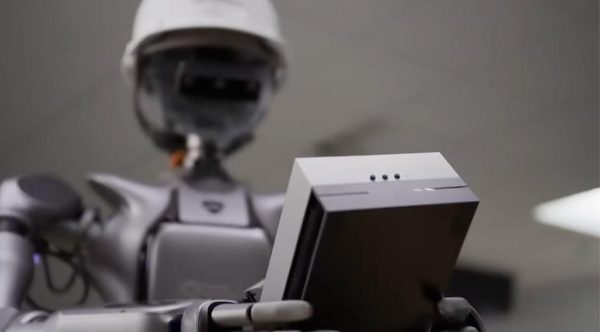
At CES 2026, NVIDIA unveiled something called "Helios." No, it’s not a new brand of sunglasses. It’s an embedded processor designed for industrial robotics and "edge" AI.
For years, AI has lived in a box in a data center. It was "disembodied." It could talk to you, but it couldn't move a pallet in a warehouse or fix a leaky pipe. Helios changes that. This is what the industry calls "Embodied AI."
The Profane Truth: Most "robotics" companies up until now have been selling expensive toys. They were clumsy, stupid, and required a team of engineers to move an inch.
NVIDIA is trying to fix that by putting the "brain" directly into the machine. This is where the Alpa Mayo advancements come in. We’re talking about AI that can perceive the physical world and interact with it in real-time. This isn’t just about making a cool YouTube video of a robot doing a backflip. This is about the millions of warehouses, factories, and construction sites that are desperate for automation because they can't find enough human workers - or because humans are too expensive to insure.
When you see a robot holding a "black box," that box is the intelligence. It’s the ability to process complex data on the fly without needing to "call home" to a server in Virginia. This is the "Edge." If NVIDIA can dominate the chips that go inside the robots, they aren't just winning the data center war; they’re winning the physical world. GTC 2026 is already being teased as the "Physical AI" event. They are signaling to the world that the next phase of growth isn't on your screen - it's in your garage, your factory, and your hospital.
The Grok Acquisition and the Pivot to Inference

Here is a word you need to learn if you want to sound smart at the bar: Inference.
For the last three years, the big money was in "training." That’s when you feed a giant model like GPT-4 billions of pages of text so it can learn how to speak. It takes massive amounts of power and thousands of GPUs. But once the model is trained, you have to actually use it. That’s inference.
Every time you ask an AI a question, that’s an inference. And as AI moves into every phone, every car, and every robot, the demand for inference is going to dwarf the demand for training.
NVIDIA knows this. That’s why they just acquired Grok (not the Elon Musk one, the chip architecture firm). This move is a direct shot across the bow of companies like Groq (with a 'q') and other startups trying to claim the inference throne. By acquiring this tech, NVIDIA is making sure their hardware is just as efficient at running AI as it is at building it.
This is a classic "moat" move. They saw a potential weakness - that their giant, power-hungry H100 chips might be "overkill" for simple inference tasks - and they bought the solution. It pressures every competitor in the distributed AI infrastructure space. It tells the market: "We own the whole stack. Don’t even bother trying to find a niche."

The $3 Trillion Question: Is the Math Bullshit?
Let’s look at the numbers, because at the end of the day, that’s all that matters for your brokerage account.
NVIDIA is projecting revenue to jump from $213 billion in 2026 to nearly $320 billion by 2027. They’re looking at a $3 trillion to $4 trillion "Total Addressable Market" (TAM) for data centers by 2030.
The Reality Check: Those are "End of the World" numbers. Usually, when a company says their market is going to be worth $4 trillion, I laugh and walk away. That’s more than the GDP of most countries.
But then I look at TSMC’s capex. I look at the energy demand. I look at the fact that every single Fortune 500 company is currently terrified that if they don't spend billions on AI infrastructure, they’ll be the next Blockbuster Video.
The "system" might be rigged, and the valuations might be eye-watering, but the momentum is backed by physical reality. This isn't Pets.com. This is the build-out of a new type of utility. NVIDIA’s $5 trillion valuation isn't based on "hope" - it’s based on the fact that they are the only ones capable of providing the "shovels" for the biggest gold rush in human history.
However, don't be an idiot. High-paying construction jobs and massive data centers take time to build. There will be hiccups. There will be energy shortages. There will be "nasty" quarters where the hype outpaces the literal ability to pour concrete.
But if you’re looking for where the "smart money" is hiding, it’s not in the latest AI app. It’s in the infrastructure. It’s in the companies that are building the "Five-Layer Cake" from the ground up. NVIDIA is leading the charge, but the ripple effects are hitting energy, real estate, and industrial robotics.
Keep your head on a swivel. Don't buy into the "new paradigm" bullshit, but don't ignore the fact that the entire world is being re-wired right in front of your eyes. If you want to win, you have to follow the hardware. Everything else is just noise.
